

Ketone Esters Could Save Your Muscles on Semaglutide — New Study Shows
A new JCI Insight study finds that ketone ester supplementation preserves muscle mass during semaglutide-driven weight loss — without compromising fat loss.
The GLP-1 Muscle Problem Nobody Wants to Talk About
Here is the uncomfortable truth about semaglutide and tirzepatide: up to 45% of the weight you lose on these drugs comes from skeletal muscle, not fat. That number has been rattling around the medical literature for two years now, and it remains the single biggest unresolved concern in the GLP-1 space.
For a 50-year-old woman losing 40 pounds on Ozempic, that could mean shedding 18 pounds of lean tissue — the kind that keeps bones strong, metabolisms running, and frailty at bay. For older adults, that trade-off can push them from overweight into sarcopenia, a condition defined by progressive loss of muscle mass, strength, and function that affects an estimated 10-16% of people over 65.
Clinicians have scrambled for solutions. High-protein diets help but do not fully solve the problem. Resistance training is critical but many patients on GLP-1 drugs are starting from a deconditioned baseline. Peptide stacks like BPC-157 and TB-500 support tissue repair but do not directly prevent the metabolic-driven muscle catabolism that GLP-1 receptor agonists trigger.
Now, a study published June 9, 2026 in JCI Insight — one of the most respected journals in translational medicine — points to an unexpected solution: ketone esters.
What the University of Alberta Study Found
A team led by Dr. Jason Dyck at the University of Alberta's Cardiovascular Research Centre designed an elegant experiment. They took obese, glucose-intolerant mice and divided them into three groups:
1. Vehicle (control)
2. Semaglutide alone
3. Semaglutide plus a beta-hydroxybutyrate (BHB) generating ketone ester
After three weeks of treatment, the results were striking:
Semaglutide alone: reduced lean mass, impaired muscle strength, suppressed mitochondrial gene expression, and elevated atrophy-related genes (the molecular machinery that breaks down muscle fiber).
Semaglutide plus ketone ester: preserved skeletal muscle mass and function — without compromising fat loss. The mice still got leaner. They just did not sacrifice their muscles to get there.
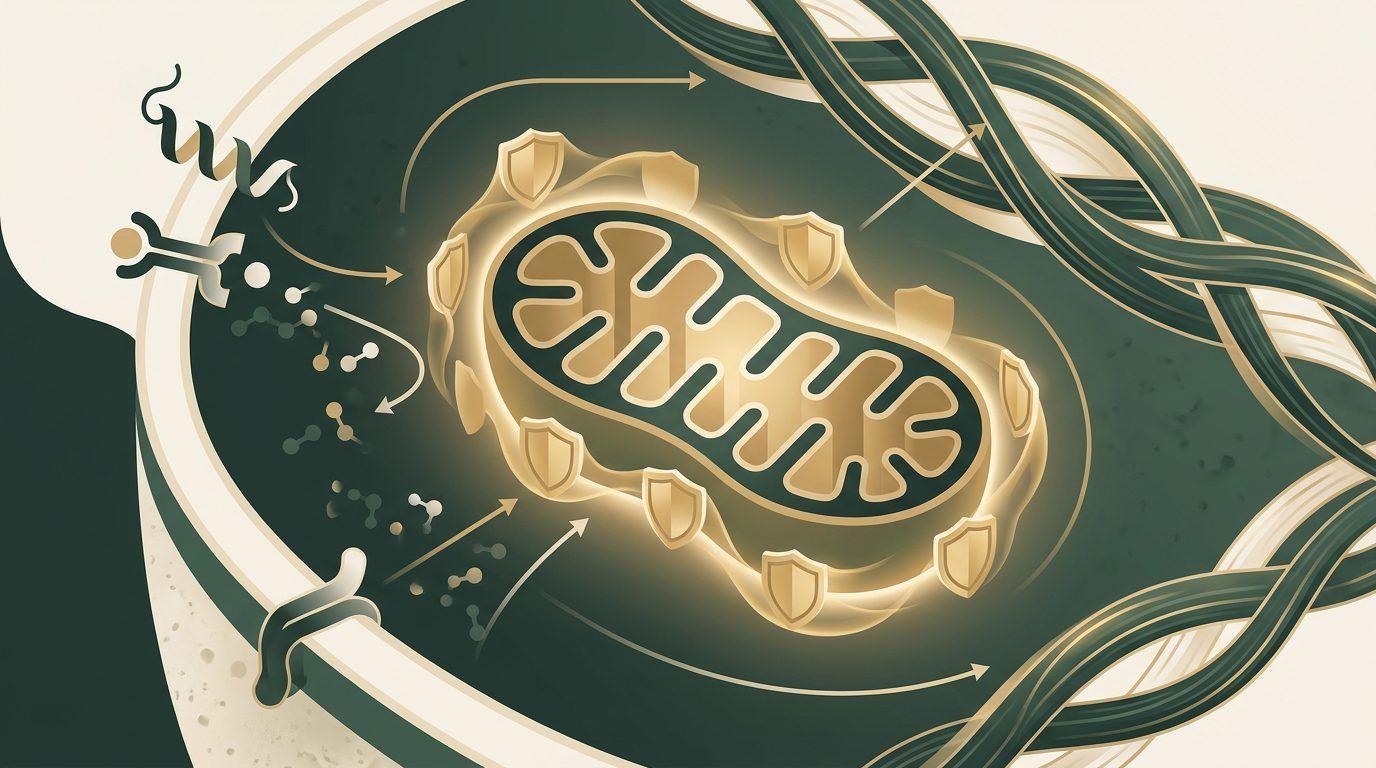
The mechanism is where it gets interesting. Ketone ester co-treatment prevented semaglutide-induced changes in mitochondrial and atrophy-related gene expression. In plain language: semaglutide appears to disrupt mitochondrial function in muscle cells and activate the body's muscle-dismantling machinery. Ketone esters counteract both of those downstream effects.
Why Ketone Esters? The Science Behind the Supplement
Beta-hydroxybutyrate is not just an alternative fuel source that your liver produces during fasting or carbohydrate restriction. It is a signaling molecule with real biological activity. A 2026 review in Nutrients by researchers at Italy's National Institute of Health and Science on Aging laid out the mechanisms:
HDAC inhibition: BHB acts as a histone deacetylase inhibitor, which means it can influence gene expression patterns involved in muscle maintenance and stress resistance.
Anti-inflammatory signaling: BHB modulates inflammatory pathways that contribute to muscle wasting, particularly the NF-kB pathway.
Mitochondrial support: BHB fuels mitochondrial biogenesis and function — exactly the process that semaglutide appears to suppress in muscle tissue.
Nutritional ketosis in humans typically produces circulating BHB levels of 0.5 to 3.0 mM. Ketone ester supplements are the most direct way to raise blood BHB without prolonged fasting or strict ketogenic dieting. They bypass the liver's production bottleneck and deliver exogenous ketones that circulate within 30 minutes of ingestion.
What This Means If You Are on a GLP-1 Drug
Let's be clear about what this study does and does not prove. This is a preclinical mouse study, not a human clinical trial. The mice were treated for three weeks, not the 12-18 months that typical GLP-1 patients undergo. The dose translation to humans is not established.
But the signal is strong enough to matter. Here is why:
The problem is real and well-documented. Multiple human studies have confirmed that GLP-1 receptor agonists cause disproportionate lean mass loss. A 2024 meta-analysis in The Lancet found that 25-39% of total weight loss from GLP-1 drugs was lean mass, and some studies reported figures as high as 45%.
The mechanism is plausible. GLP-1 receptor agonists reduce appetite dramatically, which often leads to inadequate protein intake. They also shift the body's energy substrate utilization in ways that may favor muscle catabolism. Ketone esters address the mitochondrial and signaling pathways that drive this process.
Ketone esters have a reasonable safety profile. They are already used by elite athletes (the military and Olympic endurance teams have tested them) and are sold as dietary supplements. Side effects are generally limited to GI discomfort at high doses.
Practical Takeaways: What You Can Do Right Now
If you are currently on semaglutide, tirzepatide, or any GLP-1 receptor agonist, here is a research-informed approach to protecting your muscle mass:
1. Prioritize protein. Aim for 1.2-1.6 grams per kilogram of body weight daily. Distribute it across meals — your muscles need 25-40 grams per sitting to optimally stimulate muscle protein synthesis.
2. Resistance train. Even two sessions per week of basic compound movements (squats, deadlifts, rows, presses) makes a significant difference. This is non-negotiable on GLP-1 therapy.
3. Consider ketone ester supplementation. While human trials are still needed, the preclinical data is compelling. Ketone ester supplements (typically containing BHB monoester) are available over the counter. Typical doses in research settings range from 25-50 grams per day. Start low to assess GI tolerance.
4. Monitor your body composition. Do not rely on the scale alone. DEXA scans, bioelectrical impedance, or even simple waist-to-hip ratios can tell you whether you are losing fat, muscle, or both.
5. Talk to your prescriber. If your physician put you on a GLP-1 drug, they should be tracking your lean mass. If they are not, ask them to.
The Bigger Picture: GLP-1s Are Not Going Away — But Neither Is the Muscle Problem
GLP-1 receptor agonists have transformed obesity medicine. Semaglutide and tirzepatide produce weight loss that was previously only achievable through bariatric surgery. They reduce cardiovascular events, improve kidney outcomes, and may protect against neurodegeneration.
But the muscle loss issue is the crack in the foundation. If millions of people lose 15-20% of their lean mass on these drugs, the long-term public health consequences — falls, fractures, metabolic decline, loss of independence in aging — could be substantial.
Ketone esters are not a proven clinical solution yet. But this JCI Insight study provides a mechanistic rationale and a preclinical proof of concept that warrants rapid translation to human trials. The University of Alberta team noted this explicitly: their findings support ketone therapy as a promising strategy that warrants clinical evaluation.
Until those trials are done, the best approach is layered: protein, resistance training, body composition monitoring, and — for those willing to try emerging science — ketone ester supplementation as a potential insurance policy for your muscles.
Evidence Grade
Grade: B (Promising Preclinical — Human Trials Needed)
The study is published in a high-impact journal (JCI Insight), uses a well-designed preclinical model, identifies clear molecular mechanisms, and shows preserved muscle mass without compromised fat loss. However, it is a mouse study with a 3-week treatment window. Human clinical trials are needed to confirm efficacy, establish dosing, and assess long-term safety in the GLP-1 patient population.
Sources
1. Abuetabh Y, et al. Semaglutide-induced loss of skeletal muscle mass is blunted by co-administration of ketone esters. JCI Insight. 2026 Jun 9. doi: 10.1172/jci.insight.201810
2. Venturini C, et al. The Role of Ketogenic Diet and BHB in the Prevention of Muscle Catabolism and Sarcopenia. Nutrients. 2026;18(5):761.
3. Jamnick NA, et al. MOTS-c partially protects against skeletal muscle deterioration. Front Med. 2026 May 25.
4. Bajaj HS, et al. Retatrutide TRANSCEND-T2D-1 phase 3 trial. Lancet. 2026 Jun 6.
Medical Disclaimer
This article is for informational purposes only and does not constitute medical advice. Peptide therapies and supplements discussed here are not FDA-approved for all uses described. Always consult a qualified healthcare provider before starting any new supplement or modifying your treatment protocol. Oria BioStack provides research-backed information to support informed conversations between patients and their physicians.
Related Compounds
Build Your Personalised Protocol
Turn your research into a personalised supplementation protocol with the BioStack Generator.